Quick answer: In a compact home, measure the gap before you buy anything and go vertical wherever you can. Fewer, better-fitting baskets beat lots of small ones, because visible floor is what makes a room read as bigger and every container you add takes some of it away.
I rent a compact two-bed in Glasgow with no loft, no garage and one cupboard that is mostly boiler. Everything I know about small-space storage I learned by getting it wrong first.
Measure before you buy, every time
The single most useful habit, and the one nobody does.
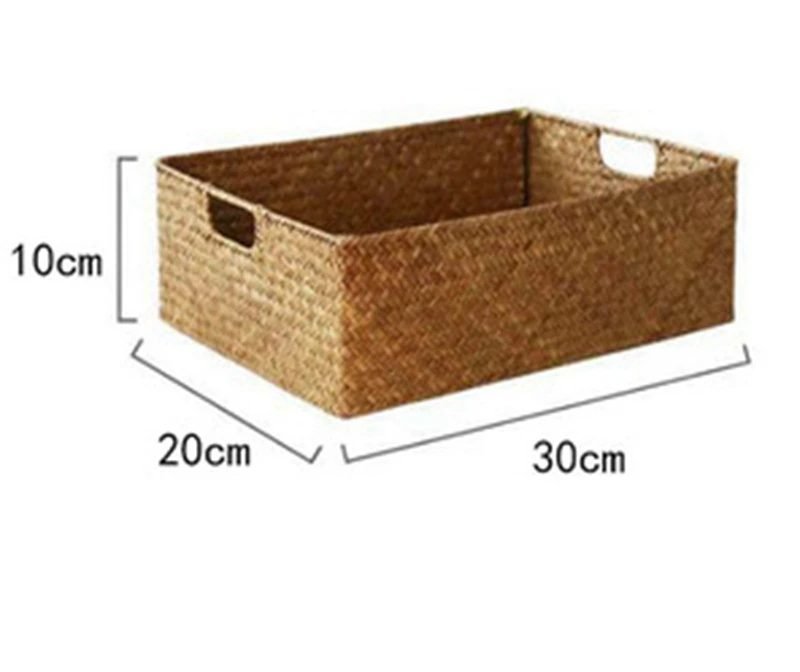
Storage baskets are sold by rough description far more than by dimension, and a basket that is two centimetres too wide for a shelf is completely useless. It does not go anywhere else, and it does not go back in the box either.
Measure three things: the width of the gap, the depth from front to back, and the clear height. Then take a centimetre off each as working tolerance. The shelf storage guide covers fitting baskets to existing shelving.
Vertical space is free
Floor is what you are short of. Walls, doors and the space above head height are usually completely unused.
Over-door organisers use a surface that exists in every room and costs nothing to occupy - an over-door organiser holds far more than its footprint suggests.
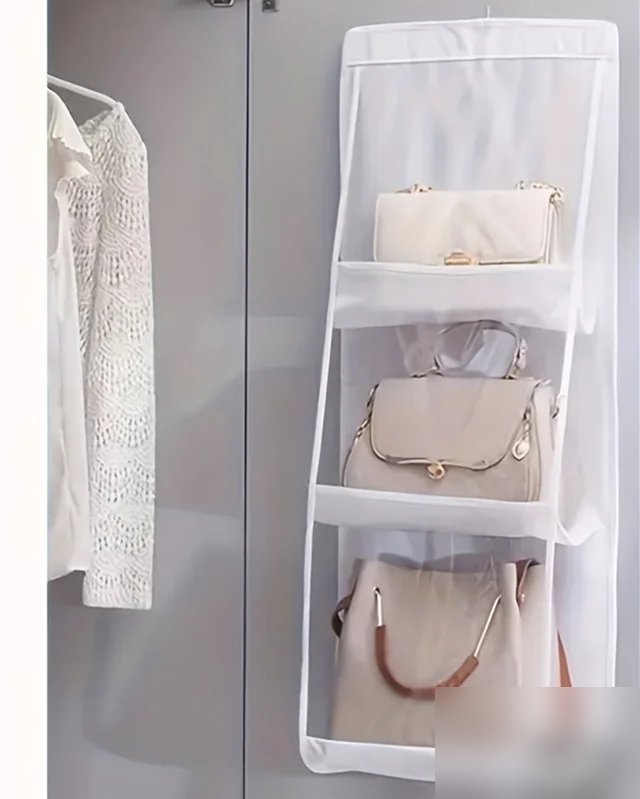
Hanging organisers inside a wardrobe turn one hanging rail into several shelves. A hanging organiser does that without a single screw, which matters if you rent.
Wall-mounted baskets take things off worktops entirely - the wall and hanging range is where to look.
Renting complicates this, but less than people think - the no-drilling guide covers what works without fixings.
Use the dead space you already have
Every small home has volume nobody is using.
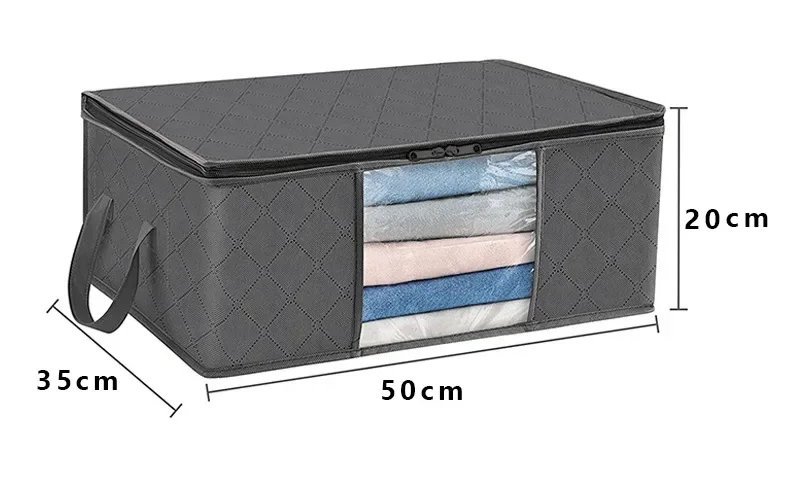
- Under the bed. The biggest single storage area in most flats, and usually empty or full of dust. Under-bed boxes are the highest-return purchase here.
- The top shelf of a wardrobe, which is too high for daily use and perfect for seasonal things.
- Behind a door, where nothing else can go.
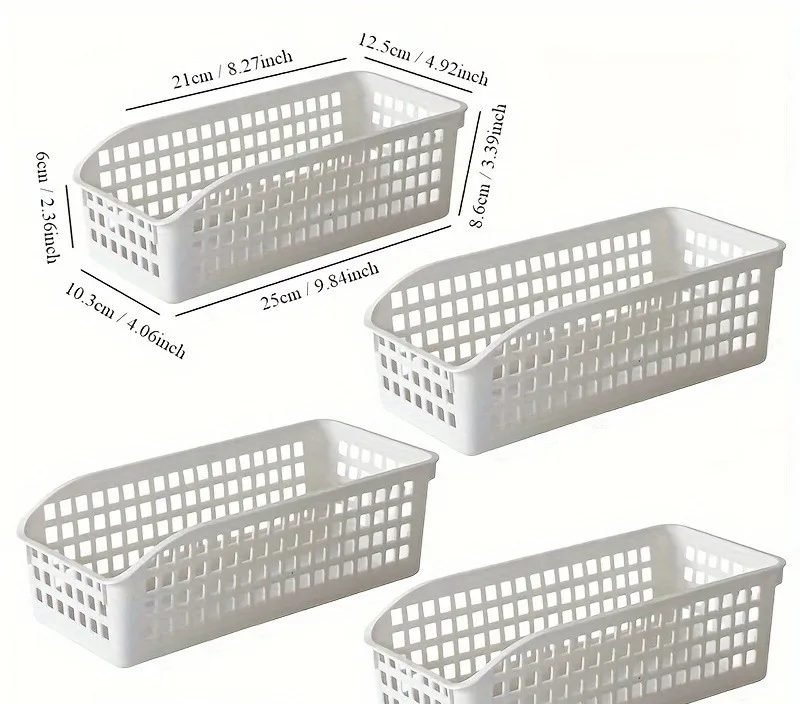
- The gap beside a fridge or washing machine - narrow, awkward, and ideal for something slim.
Slim baskets exist precisely for that last one, and a set of four costs less than losing the space does.
Fewer and better-fitting beats more
The instinct in a small home is to buy lots of small containers. It usually makes things worse.
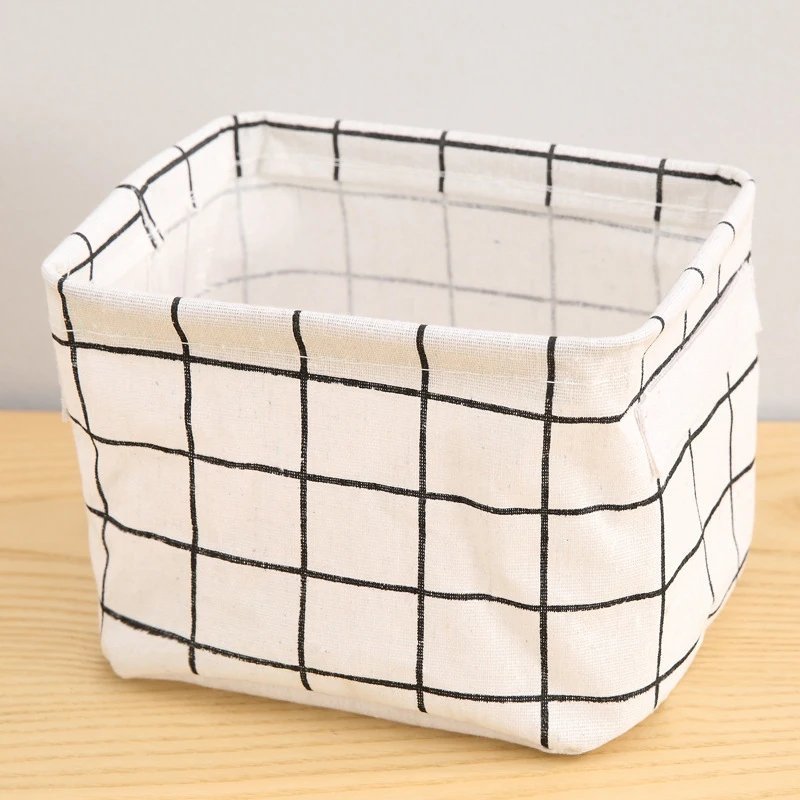
Every basket is an object taking up room, and a shelf crammed with eight mismatched tubs reads as clutter even when everything inside is tidy. Three baskets that fit the shelf exactly read as storage.
Visible floor and visible surface are what make a room feel bigger. Storage that eats them is working against you - which is the point the visual clutter guide makes at length.
Match the basket to the shelf, not the stuff
A slightly counter-intuitive rule that saves a lot of money.
Buy for the space first and work out what goes in afterwards. If you buy for the contents, you end up with a basket that fits the jumpers and not the cupboard, and the cupboard is the thing you cannot change.
Cube shelving is the easiest case, because the openings are a standard-ish size and baskets are made to suit them - the shelf and cube range covers those.
Lids: only where they earn it
Lids hide contents, stack, and keep dust off. They also add a step every time you want something, and in a small home you use everything more often.
So: lids on the high shelf and the seasonal box, open baskets on anything daily. The lidded baskets guide covers when they are worth it, and the lidded range has the options.
Repeat one basket
The cheapest way to make a small room look composed.
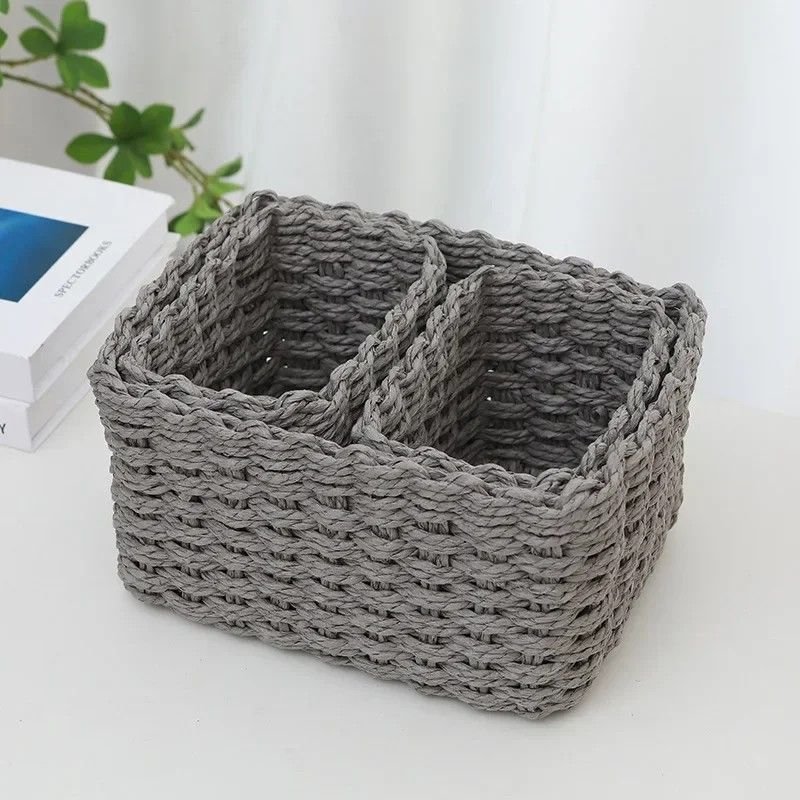
Four identical baskets on a shelf read as a system. Four different ones read as whatever was in the cupboard. It costs nothing extra to buy a set rather than singles, and sets are usually cheaper per basket anyway.
Keep the colour quiet in a small room - pale, natural or matching the wall - so the storage recedes instead of announcing itself.
Where to start
If you do one thing this weekend: measure under your bed, and buy something that fits it. It is the largest unused volume you have and the cheapest to claim.
After that, look at the back of doors. The room-by-room guide covers the rest of the house, and the complete guide covers choosing a basket generally.
The things that never fit anywhere
Every small home has three or four awkward categories that defeat normal storage, and naming them helps.
Bulky soft things - spare duvets, winter coats, sleeping bags. These are light but enormous, so they want compression rather than shelving. A vacuum or compression bag reduces a duvet to a fraction of its size and then it goes under the bed - a zipped duvet bag does the same job without a vacuum.
Long things - ironing boards, drying racks, brushes. These need a gap rather than a container, usually beside a wardrobe or behind a door.
Small heavy things - tools, tins, batteries. Rigid containers only, and low down, because a soft basket full of tins slumps and a high shelf full of them is a hazard.
Paperwork, which expands to fill whatever you give it. Give it a container with a hard limit and deal with it when it is full - boxes and baskets covers the options.
Browse shelf and cube baskets, under-bed storage and the full range. Free UK delivery over £20.
The short version
- Measure the width, depth and clear height, then take a centimetre off each.
- Vertical space - doors, walls, above head height - is free and usually unused.
- Under the bed is the largest unused volume in most flats and the cheapest to claim.
- Fewer baskets that fit exactly beat lots of small ones that do not.
- Buy for the shelf first, because the shelf is the thing you cannot change.
Frequently asked questions
How do I choose storage baskets for a small flat?
Measure the gap first - width, depth and clear height - then subtract a centimetre from each as tolerance. Baskets are sold by rough description rather than dimension, and one two centimetres too wide is simply unusable.
What is the best storage space in a small home?
Under the bed, almost always. It is the largest single unused volume in most flats, costs nothing to claim, and takes flat boxes that slide out easily. After that, the back of doors and the top shelf of a wardrobe.
Do lots of small baskets help in a small room?
Usually not. Every basket is an object taking up room, and a shelf of eight mismatched tubs reads as clutter even when the contents are tidy. Three baskets that fit the shelf exactly read as storage instead.
Should storage baskets have lids in a small home?
Only where they earn it. Lids hide contents and stack well, but they add a step every time you want something, and in a small home you use things more often. Keep lids for high shelves and seasonal storage.
How do I make storage look tidy in a small room?
Repeat one basket rather than mixing. Four identical baskets read as a system while four different ones read as whatever was in the cupboard, and buying a set is usually cheaper per basket than buying singles.