Quick answer: Kitchens want wire and plastic over natural fibre, because of grease, spills and damp. Use open wire for fruit and vegetables that need airflow, wipeable plastic inside cupboards, and pull-out baskets to make the back of deep shelves usable.
The kitchen is the room where storage gets used hardest, and where the wrong material shows up fastest.
Material comes first here
Three things make a kitchen different: grease, moisture and food.
Grease settles on everything within a few feet of a hob, and it does not come out of woven natural fibre. Moisture from a kettle or a sink keeps surfaces damp. And anything holding food needs to be cleanable properly rather than dusted.
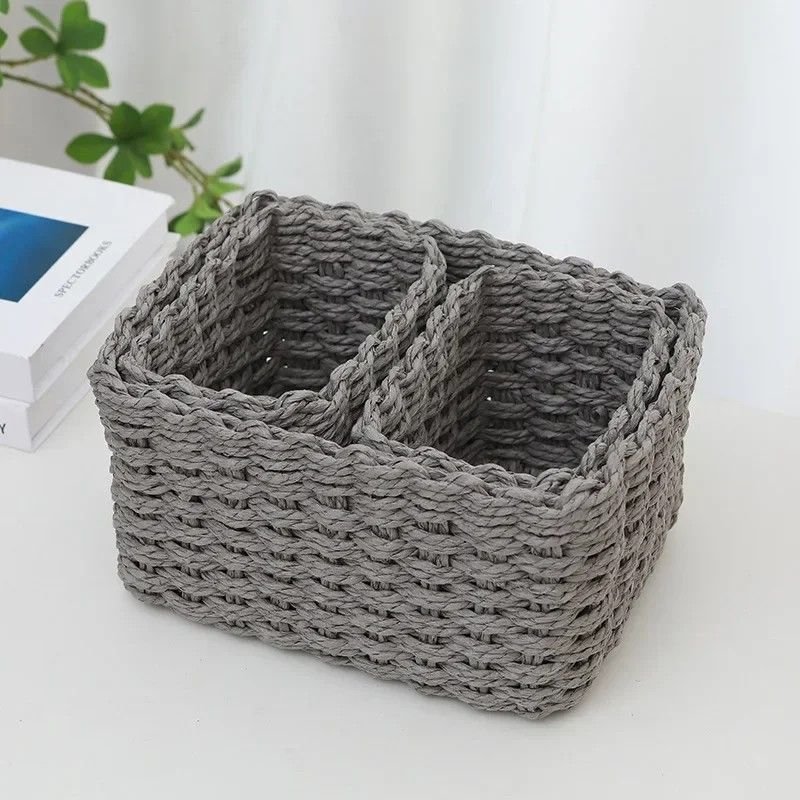
So the kitchen materials are wire and plastic, with natural fibre kept to a shelf well away from the cooking - the materials guide covers how each behaves.
Wire for anything that breathes
Fruit and vegetables need airflow. In a sealed container they sweat, and sweating produces exactly the conditions that spoil them.
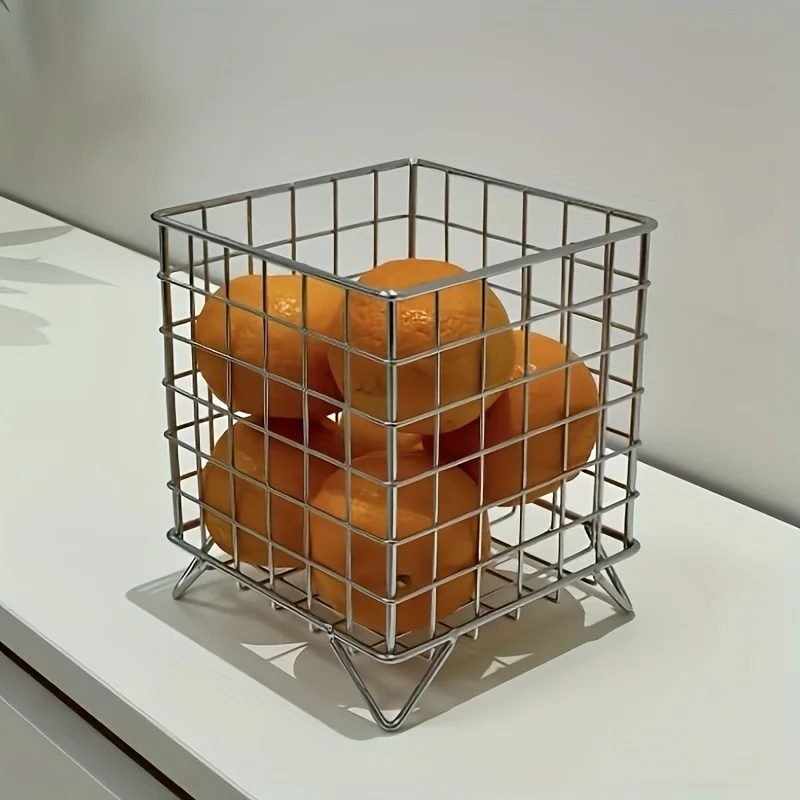
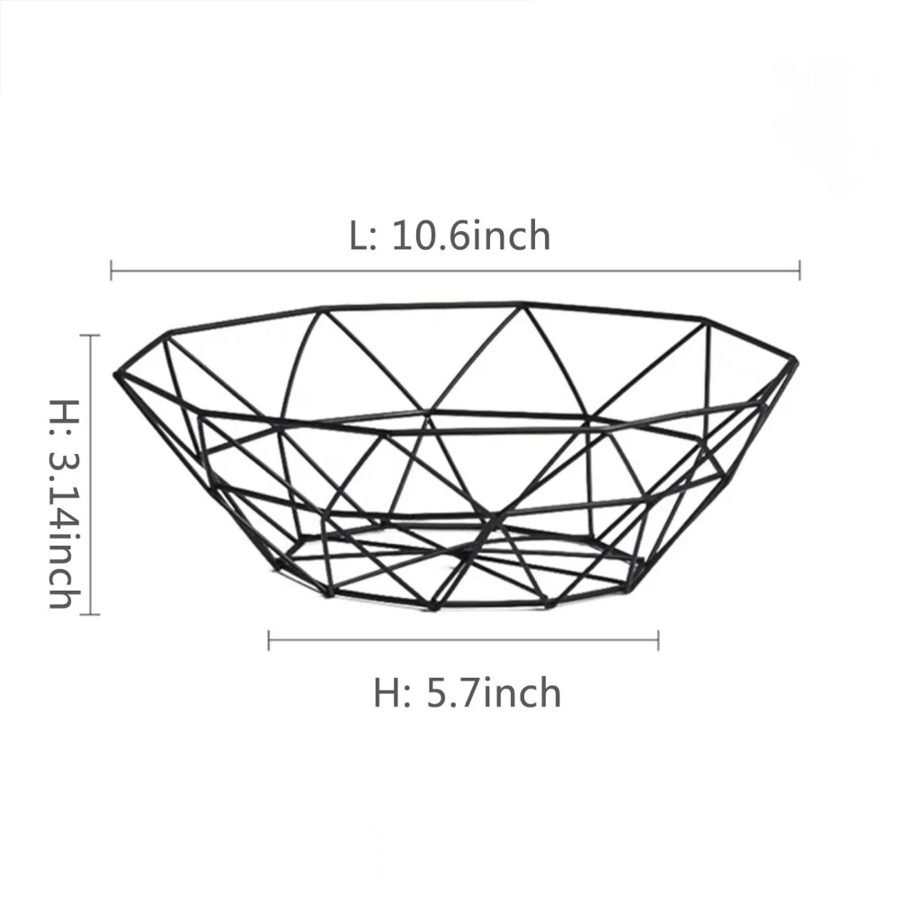
Open wire is the right answer - it lets air move on every side and you can see what is going off before it does. A wire fruit basket is the classic version.
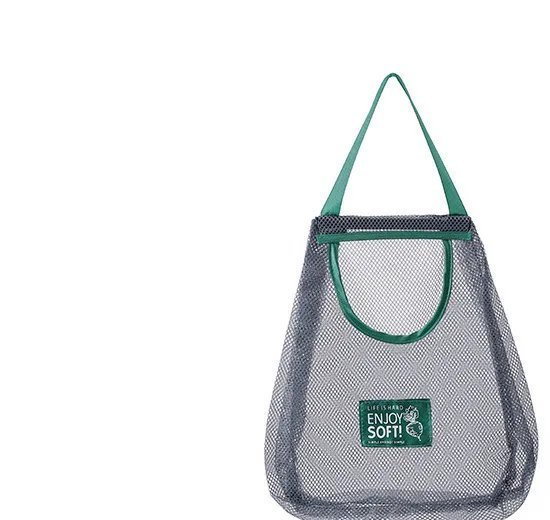
Hanging is even better where you have the height, because it uses no worktop at all - a hanging mesh bag does that for onions and potatoes.
Keep potatoes and onions apart and out of the light, which is a food storage point rather than a basket one.
Worktops: fewer, bigger, and against the wall
Worktop is the most contested space in any kitchen, so anything sitting on it must earn the room.
One basket holding the things that genuinely live out - oils, utensils, the bread - beats four small ones. Push it against the wall or into a corner rather than out in the working area.
A worktop basket corrals a category without hiding it, and keeping surfaces clear is mostly about giving these things somewhere to be.
Deep cupboards and the black hole at the back
The most wasted space in most kitchens.
A deep base cupboard has usable volume at the back that nobody can see or reach, so it fills with things that then get bought again because they were invisible.
The fix is baskets you pull out rather than reach into. Load the basket, slide it back, and pull the whole thing forward when you need anything - slim baskets suit narrow cupboards and a larger set suits deeper ones.
Group by category so one pull gets you everything for a job - baking in one, packet food in another.
Under the sink
Awkward because of pipework, and worth solving because it is where cleaning products live.
Use narrow baskets you can arrange around the pipe rather than one wide one. Choose plastic, because something will leak eventually and you want to be able to wipe it out.
Keep cleaning products together and out of reach of children, and check any product's own safety guidance rather than relying on a basket to make it safe.
Fridge and freezer
Baskets work here too, and they are underused.
In a fridge, a basket per category - dairy, snacks, leftovers - stops the back becoming a graveyard. In a freezer drawer, dividers stop everything becoming one solid block.
Use plastic only, and check anything is rated for cold. Fabric and natural fibre have no place in either.
Pantry and dry goods
If you have a pantry or a tall cupboard, baskets by category work better than shelves alone.
The rule that makes it stick is one basket per meal type or per category, with a limit. When the pasta basket is full, you have enough pasta - which is a more useful signal than a shelf that just gets deeper.
Keep the heaviest at the bottom, and label anything above eye level since you cannot see in.
What to avoid
Natural fibre near the hob or sink. Fabric anywhere food is stored loose. Lids on anything you use daily, since a lid in a kitchen is one step too many when your hands are full.
And avoid filling every gap - a kitchen with visible clear worktop reads as calm, and one with a basket on every surface does not, however tidy the contents are.
Cleaning kitchen baskets
The part that decides how long they last in this room.
Wire and plastic can go in hot soapy water, and most will take a dishwasher on a low shelf - check the manufacturer's guidance rather than assuming. Do it more often than feels necessary, because kitchen grease builds up invisibly and then all at once.
Anything holding loose food should be emptied and washed properly rather than wiped, and dried fully before refilling.
Fabric baskets in a kitchen want to be washable, and natural fibre wants to be nowhere near the cooking - the care guide covers cleaning each material.
Sizing for a kitchen
Kitchens reward slightly smaller baskets than you would use elsewhere.
A deep basket in a cupboard becomes a place things get lost in, and a wide one on a worktop eats the space you actually cook on. Shallow and narrow lets you see everything and reach the back.
The exception is a bin for recycling or vegetables, where volume is the whole point - the small baskets guide covers dividing rather than filling.
Browse kitchen storage, wire and metal baskets and vegetable baskets, with more in the room-by-room guide.
The short version
- Grease, moisture and food rule out natural fibre near the hob and sink.
- Fruit and vegetables need airflow - open wire beats anything sealed.
- Use pull-out baskets to make the back of deep base cupboards usable.
- Under the sink, use narrow plastic baskets you can arrange around the pipework.
- One larger worktop basket against the wall beats four small ones in the working area.
Frequently asked questions
What kind of storage baskets suit a kitchen?
Wire and plastic. Grease settles within a few feet of a hob and does not come out of woven natural fibre, moisture keeps surfaces damp, and anything holding food needs proper cleaning rather than dusting.
What is the best way to store fruit and vegetables?
In open wire, so air moves on every side. In a sealed container they sweat, which is exactly what spoils them. Hanging mesh works even better where you have the height, since it uses no worktop at all.
How do I use the back of a deep kitchen cupboard?
With baskets you pull out rather than reach into. Load the basket, slide it back, and pull the whole thing forward when you need something. Group by category so one pull gets you everything for a job.
What should I use under the kitchen sink?
Narrow plastic baskets you can arrange around the pipework, rather than one wide one. Plastic because something will leak eventually and you need to wipe it out. Keep cleaning products together and out of reach of children.
Can I use baskets in a fridge or freezer?
Yes, and they are underused. A basket per category in a fridge stops the back becoming a graveyard, and dividers in a freezer drawer stop everything freezing into one block. Use plastic rated for cold, never fabric.