Quick answer: For storage baskets that suit shelves, measure the internal height, depth and width first, then take about 1cm off the depth so nothing overhangs. Fill the width with two or more baskets so the run looks intentional, keep to two colours, line the fronts up flush, and leave one shelf clear for the eye to rest.
Open shelving is a beautiful lie. In the showroom it holds three hardbacks, a trailing plant and a single ceramic bowl, all lit like a gallery. In your actual home it holds chargers, batteries, spare candles, half a packet of something and a phone cable that belongs to a phone you no longer own. Storage baskets for shelves are how you close the gap between the two. They give all of that a home, hide it behind a clean front, and turn a shelf you flinch at into one you quite like looking at.
I rent a compact two-bed in Glasgow where every centimetre earns its keep, so shelves are not spare storage. They are the main event. Over the years I have sorted the baskets that genuinely calm a room from the ones that just relocate the chaos, and the difference nearly always comes down to fit. This is the room-by-room version of what I have learned.
First, measure the shelf, not the basket
Shelf baskets fail for one reason above all others: they do not fit. Buy by the photo and you end up with something that overhangs the edge or will not clear the shelf above. So before you look at a single product, get the tape out.
- Internal height between the shelves, so the basket lifts out with room to spare rather than jamming.
- Depth front to back, then knock off about 1cm so nothing pokes over the lip.
- Width, then decide how many baskets you want sitting side by side.
Two baskets that fill a shelf neatly look deliberate. One basket floating alone in the middle looks like a shrug. Fill the run.
Living room: hide the small stuff
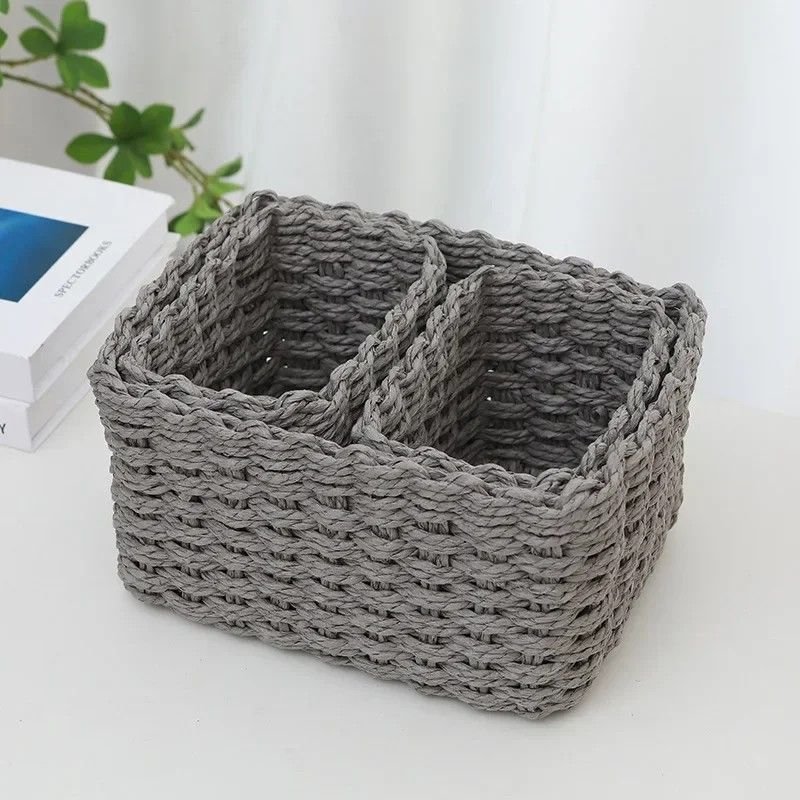
The living room shelf is where everything with no other home washes up. Remotes, cables, coasters, the odd bit of post you keep meaning to deal with. A pair of soft baskets along the bottom shelf hides the lot, while the shelves above stay styled with books and a plant that has, against the odds, survived me. A Grey Woven Storage Basket Set of Three gives you matching sizes to step down a bookcase, which is exactly what makes a whole unit read as calm rather than crammed.
Kitchen and pantry: group by task
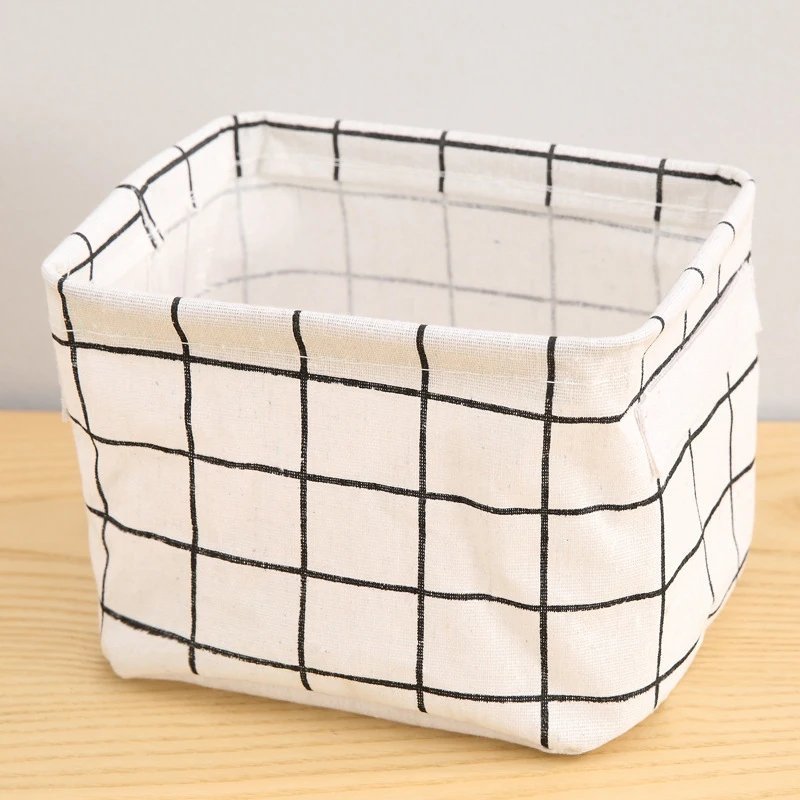
On a kitchen shelf, baskets work best when each one holds a job rather than a vague category. One for baking, one for snacks, one for the tea and coffee refills. You pull the whole basket down, use it, slide it back. No reaching past six jars to reach the seventh. Wipe-clean fabric and woven baskets suit open kitchen shelving nicely, because they soften all the hard, shiny surfaces they sit among.
Bathroom: keep it dry and reachable
Bathroom shelves take a battering from damp, so lean towards materials that shrug water off or dry quickly. A Seagrass Woven Shelf Basket holds folded towels and spare toiletries and looks genuinely warm against cold tiles. Keep the basket you raid daily at eye level, and banish the refills up top where you rarely need to reach.
Home office and hallway: control the paper
Paper is the natural enemy of a tidy shelf. It breeds. One basket for "to deal with", one for "keep", and an iron rule that nothing lives loose on the shelf. Review that first basket weekly or it quietly becomes the pile it was meant to replace. Good shelving is as much about how you use it as how it is built, a point the Royal Institute of British Architects makes about planning storage around real daily habits rather than the ideal ones (RIBA on home design).
Style it so it stays calm
A shelf of baskets can still look busy if you let it. A few plain rules keep it restful:
- Two colours, no more. Across the whole unit. This one rule does most of the work.
- Line the fronts up flush with the shelf edge, not shoved back at random depths.
- Label the closed ones you cannot see into, so the system survives a rushed Monday morning.
- Leave one shelf empty. No basket at all. The eye needs somewhere to land, and a wall of storage with no gap reads as tense.
When you clear a shelf to reset it, move the cast-offs out of the house properly through reuse or recycling, rather than shuffling them to another shelf where they will haunt you next month (WRAP on reuse and recycling).
Once the shelves are sorted, the same thinking scales to the whole home. Our room-by-room storage basket ideas guide carries it into every space, and the shelf and cube storage baskets range is grouped by the sizes that actually fit standard shelving.
FAQ
How do I know what size basket fits my shelf? Measure the internal height, depth and width of the shelf, then take about 1cm off the depth so nothing overhangs. Decide how many baskets fill the width neatly, since a full run always looks tidier than one basket in the middle.
What is the best material for bathroom shelf baskets? Seagrass and other tightly woven natural fibres cope well with occasional damp and dry quickly, while plastic or coated wire suits a very wet room. Keep porous baskets off the splash zone and let them air now and then.
Should shelf baskets have lids? Only for things you rarely touch or would rather not see. For everyday items an open basket is faster, since you skip the step of lifting a lid every single time.
About the author Nadia Kowalski - Small flat, sharp systems Nadia is a project manager renting a compact two-bed in Glasgow, where every centimetre earns its keep. She's spent years refining under-bed, on-shelf and behind-door systems that look calm rather than crammed. She writes crisp, practical guides for fellow small-space dwellers. Writing for Storage Baskets UK.